
(208) 208-1936
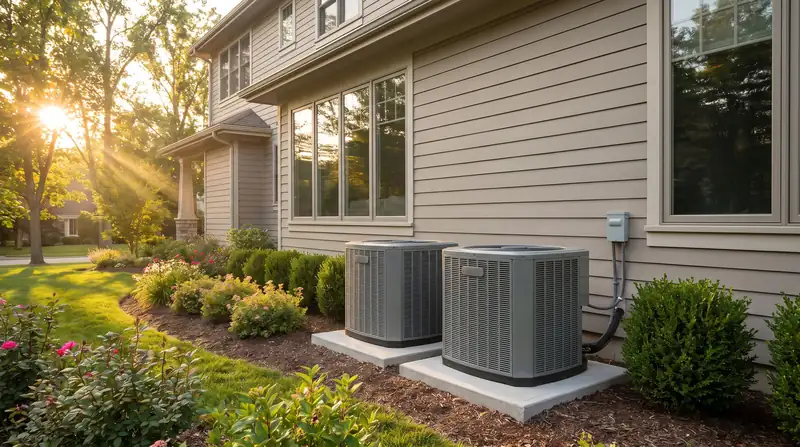
AC Repair in Twin Falls, ID: outdoor air conditioner condensers beside a two-story home

AC Repair in Twin Falls, ID

Expert AC Repair by Experienced Technicians

Honest AC repair for Twin Falls homes and businesses, with a clear price before the work begins and no pressure toward equipment you don't need.

Call Now for Pricing

On-Time Arrival Clear Written Quotes
Call (208) 208-1936
Taking calls now. Wait time: 0–2 minutes
★★★★★ 4.9 / 5 stars (95+ reviews)
Our technicians who handle AC Repair in Twin Falls, ID

Professional Service, Fast Results

Twin Falls property owners deserve a heating and cooling partner they can trust. Twin Falls HVAC combines fast response with meticulous attention to detail, ensuring every installation and repair is completed thoroughly and safely.

800+Systems Serviced
Same-DayAppointments
FairQuotes

A humming outdoor unit with a fan that will not turn is the call we get most in July in Twin Falls, ID, and the cause is usually a failed run capacitor. That inexpensive component starts the compressor and fan, fades for years without complaint, and then quits under peak load. It is far from the only suspect, though. Contactors pit and stop passing clean power, condenser fan bearings dry out, small refrigerant leaks drain away cooling capacity, and evaporator coils ice over when a clogged filter strangles airflow.

Fast SchedulingA real person picks up
Upfront PricingNo pressure, no upsells
Any Make or ModelCode-compliant work

When the heat goes out, see Furnace Repair.

Warning Signs for AC Repair

Recognizing the warning signs early can save you time and money. Here are the most common indicators that it's time to call a professional:

  • Room-temperature air from the registers even though the AC is running
  • An iced-over evaporator coil or frozen refrigerant lines
  • An AC that turns on and off every few minutes but never cools down the house
  • Hissing or bubbling sounds that suggest a refrigerant leak
  • Higher summer bills even though the house still feels warm and humid
  • Water leaking around the indoor unit or from the ceiling below it
  • The outdoor unit humming or clicking but the fan not spinning
  • A hot electrical smell or a tripped breaker whenever the air conditioner kicks on

Don't Wait for a Total Failure

Left unchecked, even a small fault or temperature swing often signals a system working its way toward a breakdown. If you notice any of these signs, call (208) 208-1936 for a prompt inspection.
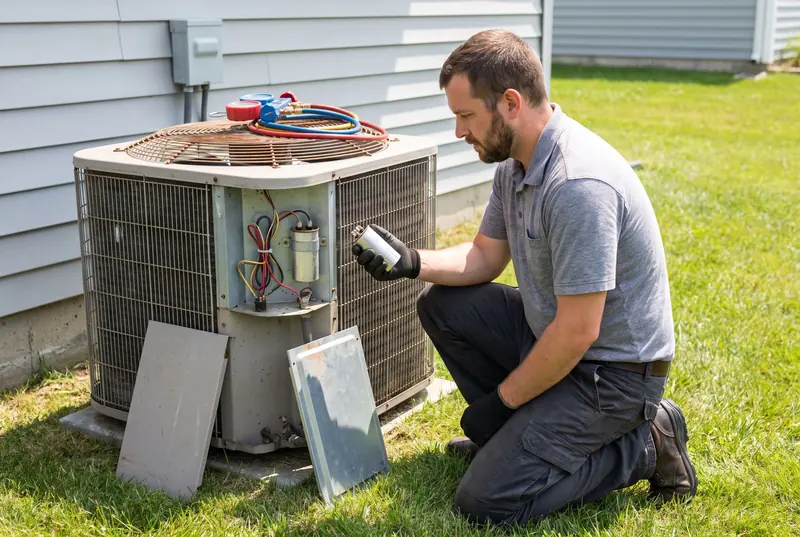
Technician holding a new run capacitor beside an outdoor AC unit in Twin Falls, ID
Most no-cool calls trace back to a small electrical part like this run capacitor, which is why the common ones ride on the truck.

Our Approach to AC Repair

Warm air from the vents can mean a failed capacitor, a refrigerant leak, a frozen coil, or a duct problem, and each one comes with a very different price to fix. That is why Twin Falls HVAC tests before touching anything. We meter capacitors against their microfarad rating, compare compressor and fan amp draws to the data plate, judge the refrigerant charge by superheat and subcooling instead of pressure alone, and inspect the coil, blower wheel, and filter whenever there is ice. Topping off refrigerant without locating the leak only buys cold air until the charge leaks out again.

Central air, heat pumps running in cooling mode, and ductless mini splits from every major brand are all part of our daily work. Because our trucks carry capacitors, contactors, fan motors, hard-start kits, and condensate pumps, most AC repairs are completed the same visit. If the compressor has failed on an older system, we tell you so directly and show you the numbers on repairing versus replacing. Call (208) 208-1936 for fast AC repair in Twin Falls.

How Much Does AC Repair Cost in Twin Falls?

Most air conditioner repairs in Twin Falls land between $150 and $650. Small electrical parts like capacitors and contactors sit at the low end, while refrigerant leaks, coils, and compressors cost more. Twin Falls HVAC diagnoses the problem first and gives you a written price before any work starts.

What Affects the Price

  • How old the unit is and how easy its parts are to source
  • The type of refrigerant, since older R-22 systems cost far more to recharge
  • Whether the repair is urgent, after hours, or can be scheduled
  • How hard the equipment is to reach, such as attics, crawlspaces, or rooftops

If a repair would cost more than a third of a new system, or your AC is past 12 to 15 years old, we'll show you both numbers side by side so you can decide. Questions about cost? Call (208) 208-1936.

RepairTypical costWhat it usually means
Capacitor replacementMost common repair, usually same visit$150–$400Most common repair, usually same visit
Contactor replacementWorn relay that stops the condenser from starting$150–$350Burned or pitted switch that powers the outdoor unit
Condenser fan motorOutdoor fan stops, compressor trips on high heat$300–$700Fan won't spin, unit overheats and shuts down
Refrigerant leak repair + rechargeVaries with where the leak is and how much charge is lost$300–$1,500Varies with where the leak is and how much charge is lost
Evaporator coil replacementMajor repair; worth weighing against replacement on older systems$1,000–$2,500Corroded or leaking indoor coil
Compressor replacementLargest single repair; often weighed against a new system$1,500–$3,000On systems past 10–12 years, replacement usually makes more sense

Ranges are typical for these repairs; you get an exact quote before any work starts.

What to Expect From Our AC Repair

Every visit follows a step-by-step method refined over years of hands-on experience.

1

Testing First

Before any part comes out, we meter the electrical components, read the refrigerant charge with superheat and subcooling, and look over the coil, filter, and condensate line for the actual cause.

2

Clear Explanation & Price

You receive a plain explanation of the fault and its cause, plus a firm price, before we start. When a failed compressor or coil makes replacement the smarter move, we show you the numbers.

3

On-the-Spot Fix

Our trucks carry capacitors, contactors, fan motors, and the other parts that fail most in summer, so the large majority of AC repairs are completed on the spot.

4

Cooling Performance Check

Before we head out, we measure the temperature split, recheck amp draws and refrigerant charge, flush the condensate line, and run the system through a complete cooling cycle.

Need Help With AC Repair?

Taking calls now. Wait time: 0–2 minutes

Get Help: (208) 208-1936

Your AC Repair Questions Answered

Don't see your question? Call and ask a technician.

Call (208) 208-1936
Common culprits include a bad capacitor on the compressor or outdoor fan, an iced-over evaporator coil, refrigerant lost to a leak, and duct leaks that let return air skip the coil. Because the fixes and costs differ, we diagnose first. Call (208) 208-1936 for fast AC repair in Twin Falls.
Typically on the same day. We stock the parts that cause most summer failures, including capacitors, contactors, and condenser fan motors, so you are rarely waiting on an order. Call (208) 208-1936 and an experienced technician will head to your Twin Falls home.
Your evaporator coil is dropping below freezing. That happens when airflow falls off, typically from a dirty filter, a dirty coil, or a weak blower, or when the system is low on refrigerant. Continuing to run it can harm the compressor, so turn the AC off, let the ice melt, and call (208) 208-1936 so we can correct the underlying cause.
For smaller failures like a capacitor, contactor, motor, or clogged drain, repair almost always pays off, even on an older unit. Once a system passes twelve years and loses its compressor or evaporator coil, replacement tends to be the better investment, especially with R-22 and R-410A becoming more expensive to maintain. We lay out the honest math. Call (208) 208-1936 for a straight answer.

Why Professional AC Repair Matters

An air conditioner puts several hazards into one cabinet. The capacitor can deliver a painful shock long after the breaker is off, the condensing unit is wired for 240 volts, and the refrigerant circuit is a sealed, pressurized loop that federal rules forbid venting. Servicing it properly takes gauges, a recovery machine, and a vacuum pump, not a DIY recharge can. Diagnosis has its own traps. A frozen coil is as likely to be an airflow issue as a charge issue, and recharging a system that still leaks wastes money while moisture and acid work on the compressor.

Professional service sees the full picture, not just the symptom. Our technicians meter electrical parts before replacing them, make charge decisions from measured superheat and subcooling, locate leaks with electronic detectors and dye, and check the filter, blower, and static pressure any time airflow could be the issue. The result is a repair that lasts the season instead of a guess that fails in three weeks. If your system is not worth saving, we will tell you directly, backed by numbers rather than a sales pitch.

Should You DIY or Call a Pro?

Simple checks are fine to DIY, but most heating and cooling repairs need professional tools, training, and experience.

FactorDIY AttemptProfessional Service
Refrigerant Leaks Recharge cans that ignore the leak Leak found and fixed, then charge weighed in
Electrical Safety Live 240V wiring and a charged capacitor Power verified off, capacitors discharged
Frozen Coils Thawed and refrozen on repeat Root cause found: airflow or charge
Diagnosis Guesswork on faults that look the same Measured with meters, gauges, and clamps
Parts Close-enough capacitors and motors Specs matched to the equipment data plate
Result Works until the next hot spell Tested and confirmed under load
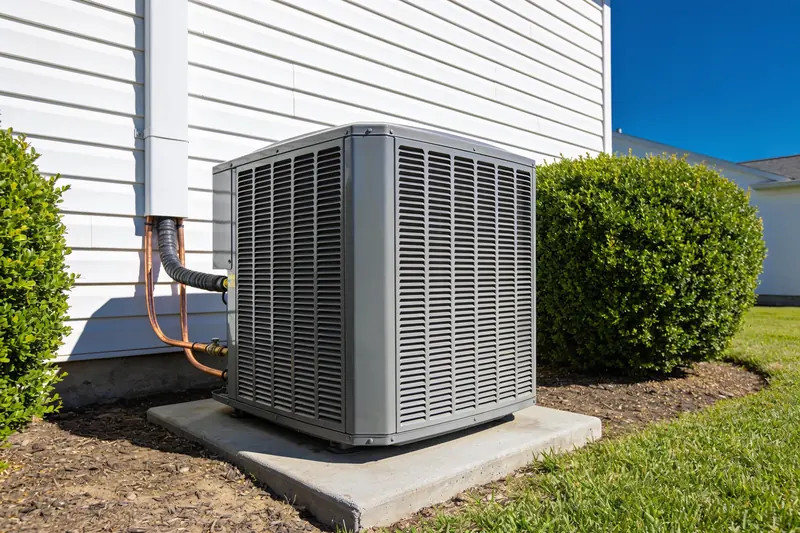
Outdoor AC condenser with trimmed shrubs set well back at a home in Twin Falls

AC Repair Prevention Tips

A little routine maintenance goes a long way toward avoiding a mid-season breakdown. Here are our expert recommendations:

  • Shade is fine, but do not box in the outdoor unit with fences or covers
  • Change the filter monthly during cooling season; starved airflow is how coils freeze
  • Keep shrubs two feet from the outdoor unit and gently rinse its coil each spring
  • Start each cooling season by flushing the condensate line so algae cannot block it
  • Pay attention to buzzing or clicking when the AC starts, a common warning of a failing capacitor
  • Keep supply and return vents open; closing rooms raises static pressure on the blower
  • Have the AC serviced every spring, ahead of the first real heat

Talk to a AC Repair Expert

Every day you wait puts more strain on a struggling unit.

Get Help: (208) 208-1936

The Twin Falls HVAC Promise

Twin Falls homeowners keep calling us back because we do honest AC repair work and stand behind the results.

No Surprises, No Pressure

Before we lift a finger, you'll know the full scope and the exact price, no fine print and no pressure to add on extras.

Local & Family-Owned

This is our home too. As a local, family-owned team, we answer the phone ourselves and show up when we say we will.

Fixed Right the First Time

Anyone can reset a breaker or swap a filter. We test the capacitors, motors, charge, and safeties so the real fault gets found and the repair actually lasts.

Done Safely, Done Right

Every install is done to local mechanical and electrical code, proper refrigerant handling, sealed connections, correct venting, and a full commissioning test, so your home stays safe.

★★★★★ Rated 4.8/5 by Twin Falls homeowners  ·  Upfront Pricing  ·  Fast Response  ·  All Brands Serviced

Schedule Your AC Repair Today

A struggling HVAC system rarely fixes itself. Reach out to Twin Falls HVAC and we'll handle it before it fails completely.

Call (208) 208-1936 Now
Heating Trouble? Call NowUpfront Pricing, No Obligation